

What Is a Vibration Motor?
What Is a Vibration Motor?
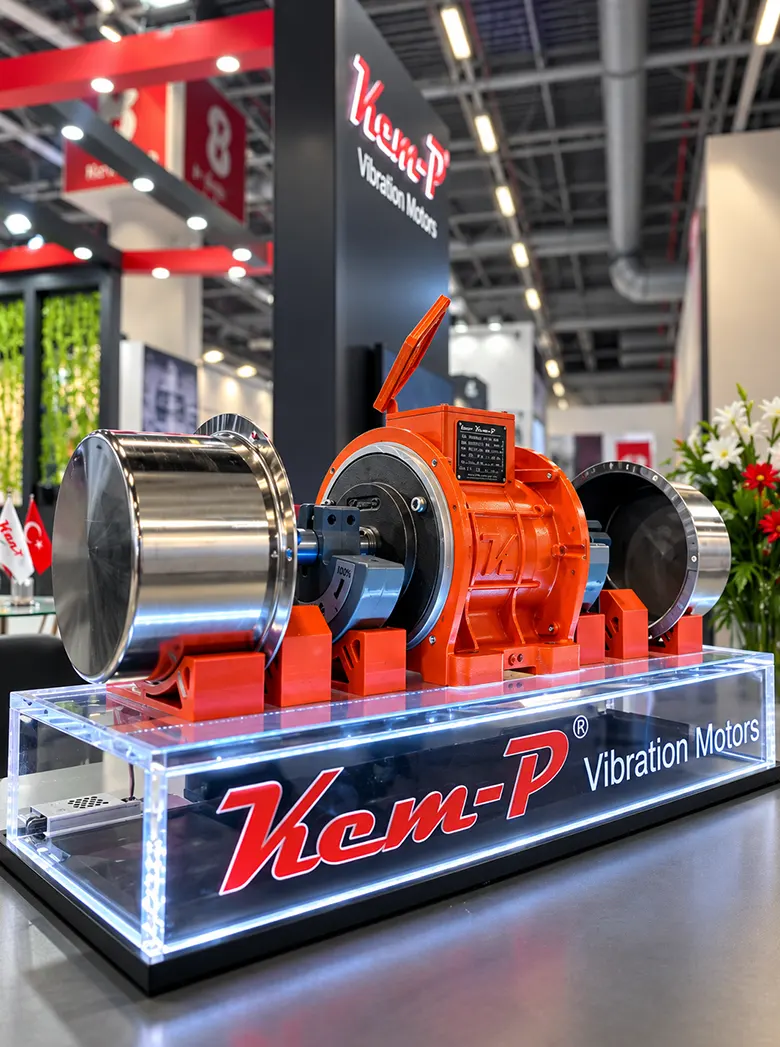
A vibration motor is an electric motor that converts rotational motion into mechanical vibration to generate controlled vibration in industrial machinery and equipment. Centrifugal force is produced by eccentric weights rotating at the ends of the motor shaft, and this force is transmitted as vibration to the connected equipment.
Industrial vibration motors can be used in a wide range of processes, including screening, feeding, dosing, compaction, classification, and facilitating material flow.
Since vibration requirements vary by application, selecting a motor with the appropriate operating speed, centrifugal force, and operating characteristics is essential for system performance.
How Does a Vibration Motor Work?
The operating principle of a vibration motor is based on the rotation of eccentric weights attached to the motor shaft.
When the motor starts, the eccentric weights rotate with the rotor, generating centrifugal force around the axis of rotation. This force is transmitted through the motor housing to the machine or equipment on which it is mounted, producing mechanical vibration.
Depending on the application, the resulting vibration can be used for material conveying, feeding, screening, classification, or compaction.
The vibration characteristics generated by the motor depend on its operating speed, the position of the eccentric weights, and the resulting centrifugal force.
What Is Centrifugal Force?
Centrifugal force is one of the key technical parameters of a vibration motor. Generated by the rotation of eccentric weights around the motor shaft, this force is the primary source of the mechanical vibration transmitted to the connected equipment.
The required centrifugal force varies between applications. Machine design and process requirements play an important role in determining the necessary vibration parameters.
Therefore, a vibration motor should be evaluated not only by its physical size or power rating but also by the vibration characteristics required for the application.
Circular and Linear Vibration
The type of motion generated in a vibration system may vary depending on the motor configuration.
Single Vibration Motor — Circular Motion
Systems using a single vibration motor can generate circular vibratory motion.
Two Vibration Motors — Linear Motion
Systems using two vibration motors can generate linear vibratory motion.
The choice between these configurations depends on the requirements of the machine and the industrial process.
1 MOTOR → CIRCULAR MOTION
2 MOTOR → LINEAR MOTION
Where Are Vibration Motors Used?
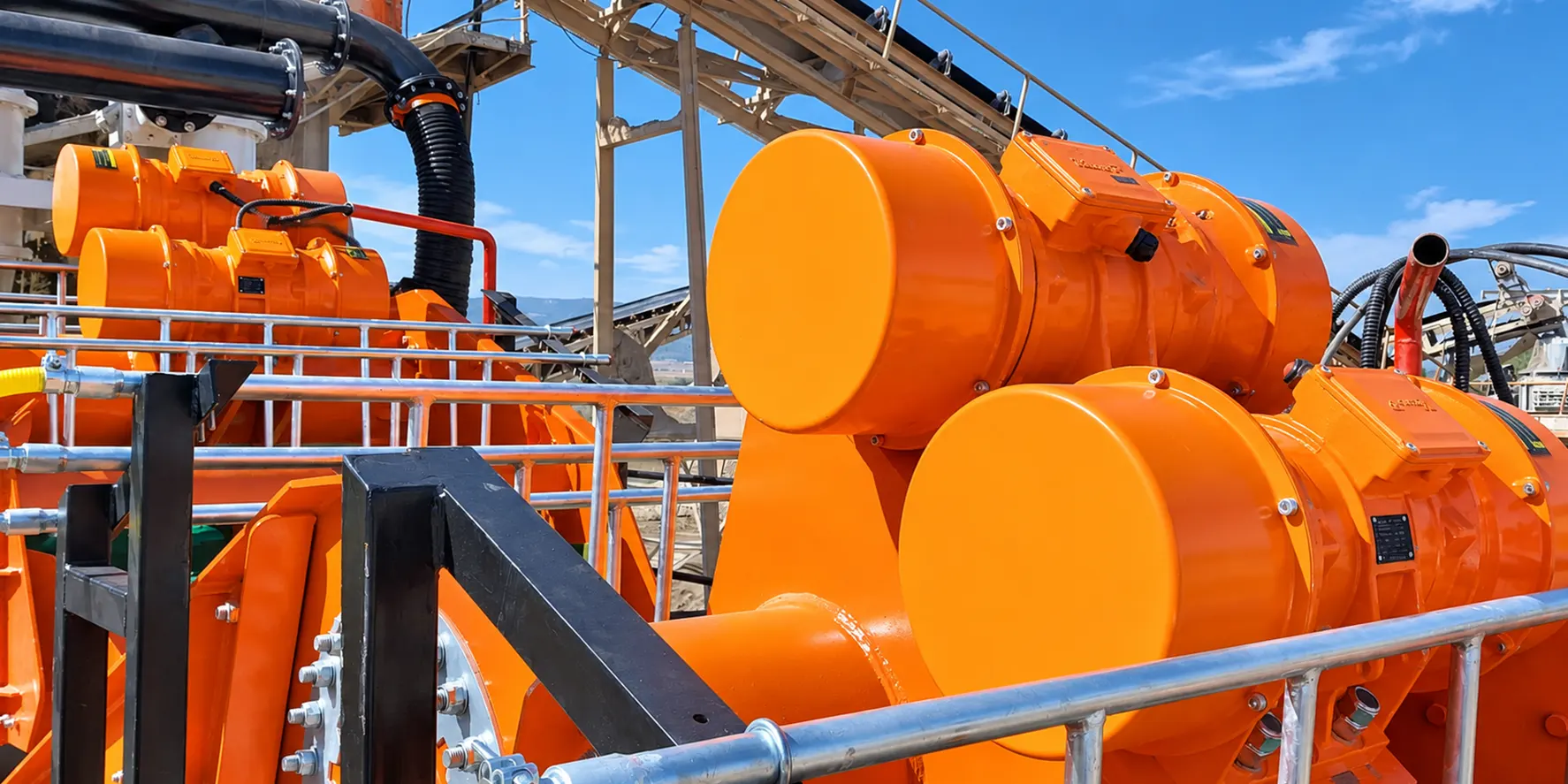
Vibration motors are used in a wide range of industrial machinery and processing equipment requiring controlled vibration.
Vibrating Screens
Vibration is used to screen and classify materials according to particle size.
Vibrating Feeders
They support the consistent and controlled feeding of bulk materials into processing lines.
Silos & Hoppers
Vibration can facilitate the discharge of stored bulk materials and improve material flow.
Dosing Systems
Vibrating systems can be used for controlled material feeding into processing equipment.
Compaction Applications
Vibration can be used to facilitate material compaction in various industrial processes.
Material Transfer Systems
Vibration technology can support the controlled movement of materials between different processing stages.
Key Technical Parameters of a Vibration Motor
When evaluating a vibration motor, the technical parameters that determine its vibration characteristics must be considered together.
Frequency refers to the number of vibration cycles within a given period and is related to the motor's operating speed.
Amplitude represents the magnitude of vibratory displacement.
Acceleration is one of the parameters describing the dynamic characteristics of vibratory motion.
Working moment is a technical parameter related to the overall oscillation and system mass.
Centrifugal force refers to the force generated by the rotation of the motor's eccentric weights and transmitted to the equipment.
Since the required values vary by application, these parameters must be evaluated together when selecting the appropriate vibration motor.
Why Is Proper Vibration Motor Selection Important?
Each vibration application has different operating requirements. For example, the frequency, acceleration, and amplitude required for feeding and screening applications may differ from those needed for compaction.
Therefore, vibration motor selection must take into account the frequency, amplitude, acceleration, working moment, centrifugal force, and vibration direction required by the application.
Vibration Technology in
Industrial Processes
Vibration motors are essential drive components used to generate or facilitate material movement in various industrial processes.
From screening and classification to feeding, dosing, silo discharge, and compaction, the required vibration characteristics may vary depending on the process.
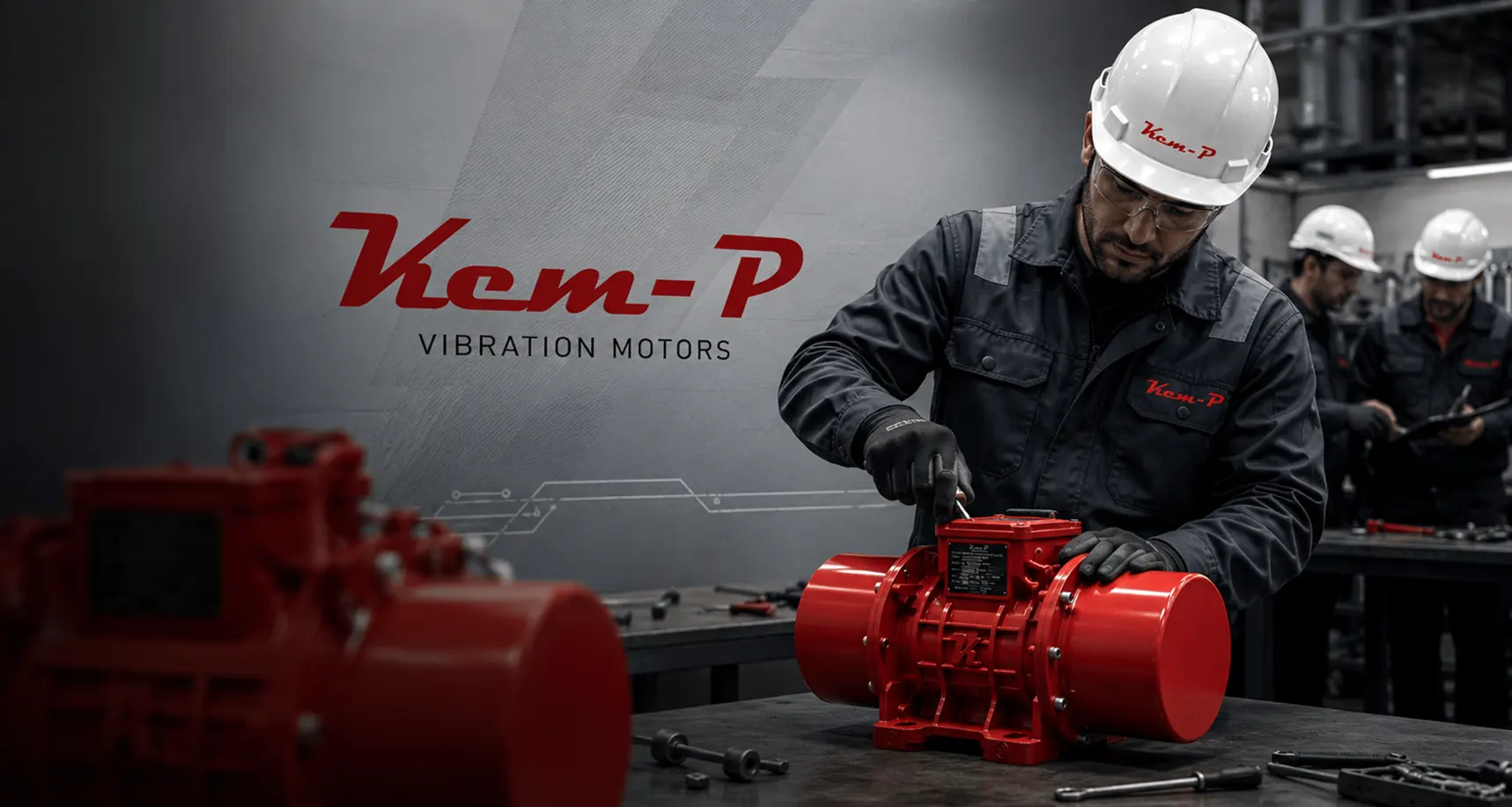
Drawing on manufacturing experience developed since 1990, KEM-P manufactures vibration motors for a wide range of industrial applications.
Doğru Motor
Doğru Uygulama