


FREQUENTLY ASKED QUESTIONS
Frequently Asked Questions About Vibration Motors
Find answers to frequently asked questions about vibration motor operating principles, motor selection, centrifugal force, installation, electrical connections, and maintenance.
The information provided in the Kem-P Technical Support section is intended to help ensure that vibration motors are used in suitable applications and under appropriate operating conditions.
This guide brings together essential technical information and precautions for the installation and operation of vibration motors.
Vibration Motor Selection
1How Do You Select the Right Vibration Motor?
Motor operating speed is directly related to vibration frequency and the resulting oscillation characteristics of the system. KEM-P technical data specifies different trough lengths and vibration amplitudes for 3000, 1500, 1000, and 750 rpm options. Therefore, operating speed must be evaluated according to the requirements of the application.
Explore
Explore
2Why Is Motor Speed Important in a Vibration Motor?
Motorun çalışma devri, vibrasyon frekansı ve sistemde elde edilen salınım karakteristiğiyle ilişkilidir. Elimizdeki Kem-P teknik verilerinde 3000, 1500, 1000 ve 750 d/d seçenekleri için farklı kanal uzunluğu ve salınım değerleri belirtilmektedir. Bu nedenle devir uygulamanın gereksinimlerine göre değerlendirilmelidir.
3Can the Centrifugal Force of a Vibration Motor Be Adjusted?
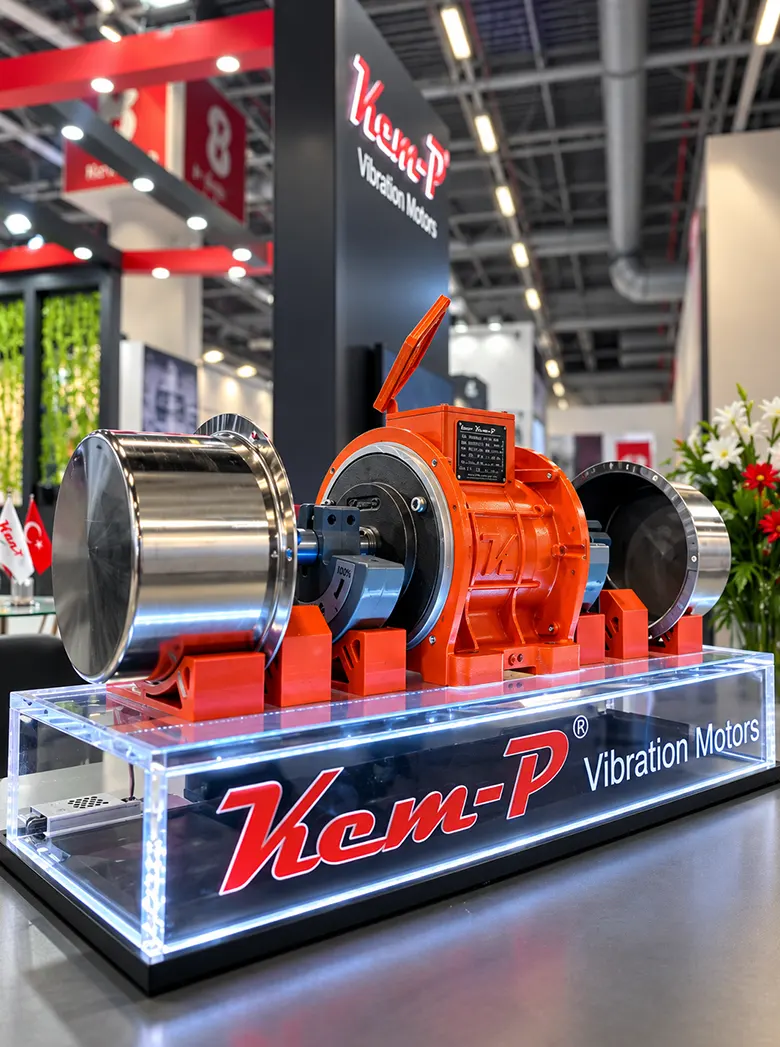
Yes. Kem-P vibration motors are supplied with a standard factory setting of 100% centrifugal force. The centrifugal force can be adjusted according to application requirements.
4What Should Be Considered When Adjusting Centrifugal Force?
The eccentric weights on both sides of the motor must be adjusted to the same value or graduation mark. In systems using two vibration motors, the centrifugal force settings of both motors must be identical. Unequal settings may generate uncontrolled forces and cause damage to the equipment.
Vibration Motors and Operating Principles
1What Is a Vibration Motor?
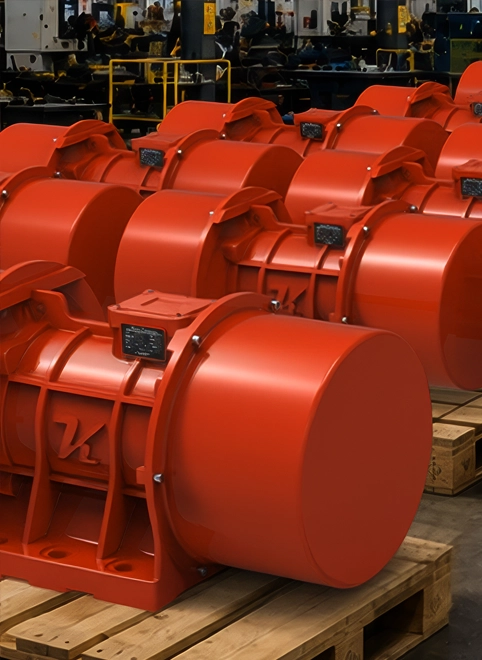
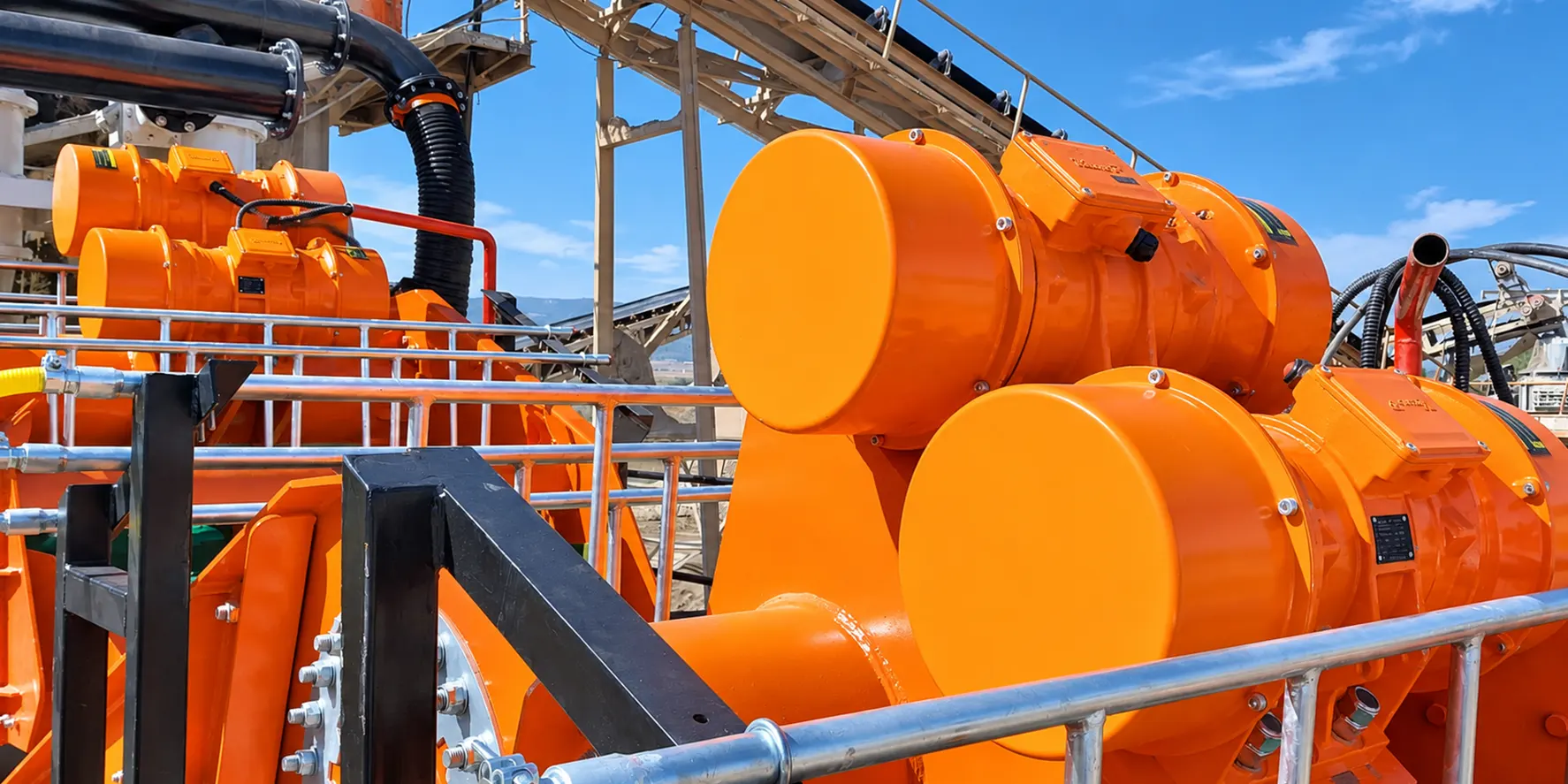
A vibration motor is an electric motor that generates centrifugal force through the rotation of eccentric weights mounted on its shaft, transferring this force to the connected machine as mechanical vibration. It can be used in various industrial processes, including screening, feeding, dosing, compaction, and material handling.
Explore
Explore
2How Does a Vibration Motor Work?
When the motor operates, eccentric weights at both ends of the shaft rotate and generate centrifugal force. This force is transmitted to the machine or structure on which the motor is mounted, producing vibratory motion.
3What Is Centrifugal Force?
Centrifugal force is the mechanical force generated by the rotation of a vibration motor's eccentric weights and transmitted to the connected equipment. The centrifugal force required by the application is one of the key technical parameters in motor selection.
4What Is the Difference Between Single- and Dual-Motor Vibration Systems?
Systems using a single vibration motor can produce circular motion, while systems using two vibration motors can generate linear motion. In dual-motor linear vibration applications, the motors must rotate in opposite directions.
Installation and Electrical Connections
1What Type of Surface Should a Vibration Motor Be Mounted On?
The mounting surface must be flat, sufficiently rigid to withstand vibration, and properly machined. It must be free from paint, rust, grease, oil, and other contaminants that could compromise the mounting connection.
2Should the Mounting Bolts Be Rechecked After Initial Startup?
Yes. According to Kem-P installation instructions, the motor should be stopped approximately 15–20 minutes after initial startup, and the mounting bolts should be retightened using an appropriate torque wrench. This inspection must be repeated after 2–3 hours and at the end of the operating day.
3Who Should Perform the Electrical Connection of a Vibration Motor?
Electrical connections for KEM-P vibration motors must be performed by qualified electrical personnel. All connections must comply with applicable electrical and safety regulations and the motor's technical documentation.
4In Which Directions Should Two Vibration Motors Rotate?
In linear vibration applications using two vibration motors, the motors must rotate in opposite directions.
Maintenance and Commissioning
1Why Is Vibration Motor Maintenance Important?
Regular maintenance and inspections help identify changes in mechanical and electrical connections, signs of bearing problems, and unusual operating conditions at an early stage. Maintenance procedures must be carried out in accordance with the technical instructions for the specific motor model.
2Can a Vibration Motor Be Started Immediately After Long-Term Storage?
For motors that have been stored or out of service for extended periods, insulation resistance should be checked before commissioning. Kem-P technical documentation also specifies that the grease must be replaced following two years of storage or inactivity.
3What Is the Permissible Operating Temperature of a Vibration Motor?
According to KEM-P installation and operation instructions, the operating temperature measured on the upper surface of the stator housing must not exceed 80°C while the motor is running.Explore
Doğru Motor
Doğru Uygulama